Portraits of the "Unseen": On Digital Craft, Indigenous Knowledge, and Building a Life in a Forest
A conversation with Kübra Köprülüoğlu Aşanlı, visual artist and designer, from a recent Virtual Studio Groups session.
Instagram · kubrakopruluogluasanli.myportfolio.com
There is a kind of portraiture that is not about likeness. It is about debt.
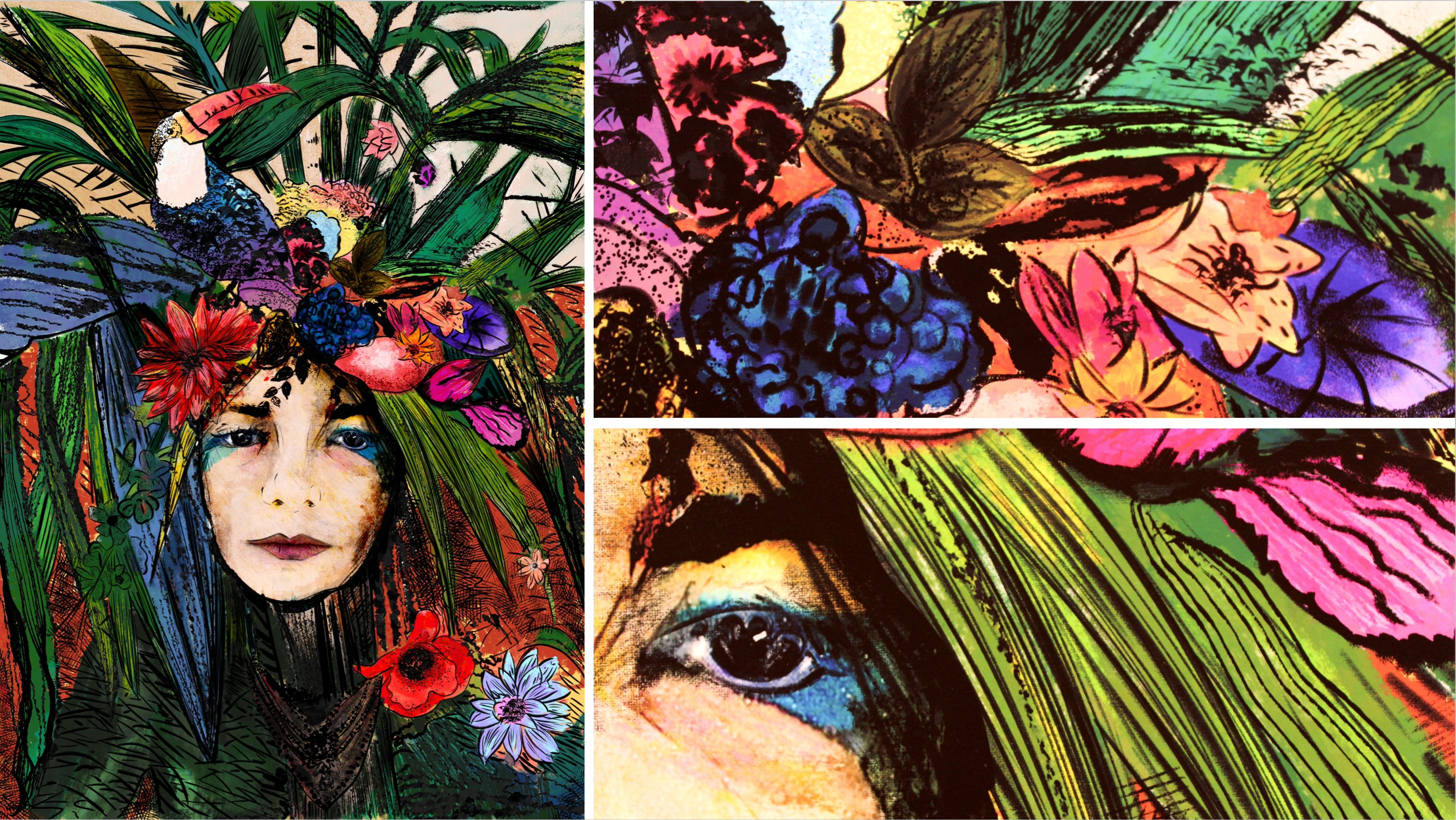
Kübra has spent years painting faces — women artists that art history filed away, indigenous communities that modernity has been trying to erase for centuries. She paints them on an iPad, in Adobe Fresco, layer by layer, hour by hour. She prints them on textured archival paper so that when someone walks into a gallery, they see a painting. They only discover it was made digitally when they read the label. She considers this a kind of solution. Not a trick.
The Forest First
Before the portraits, there was the forest.
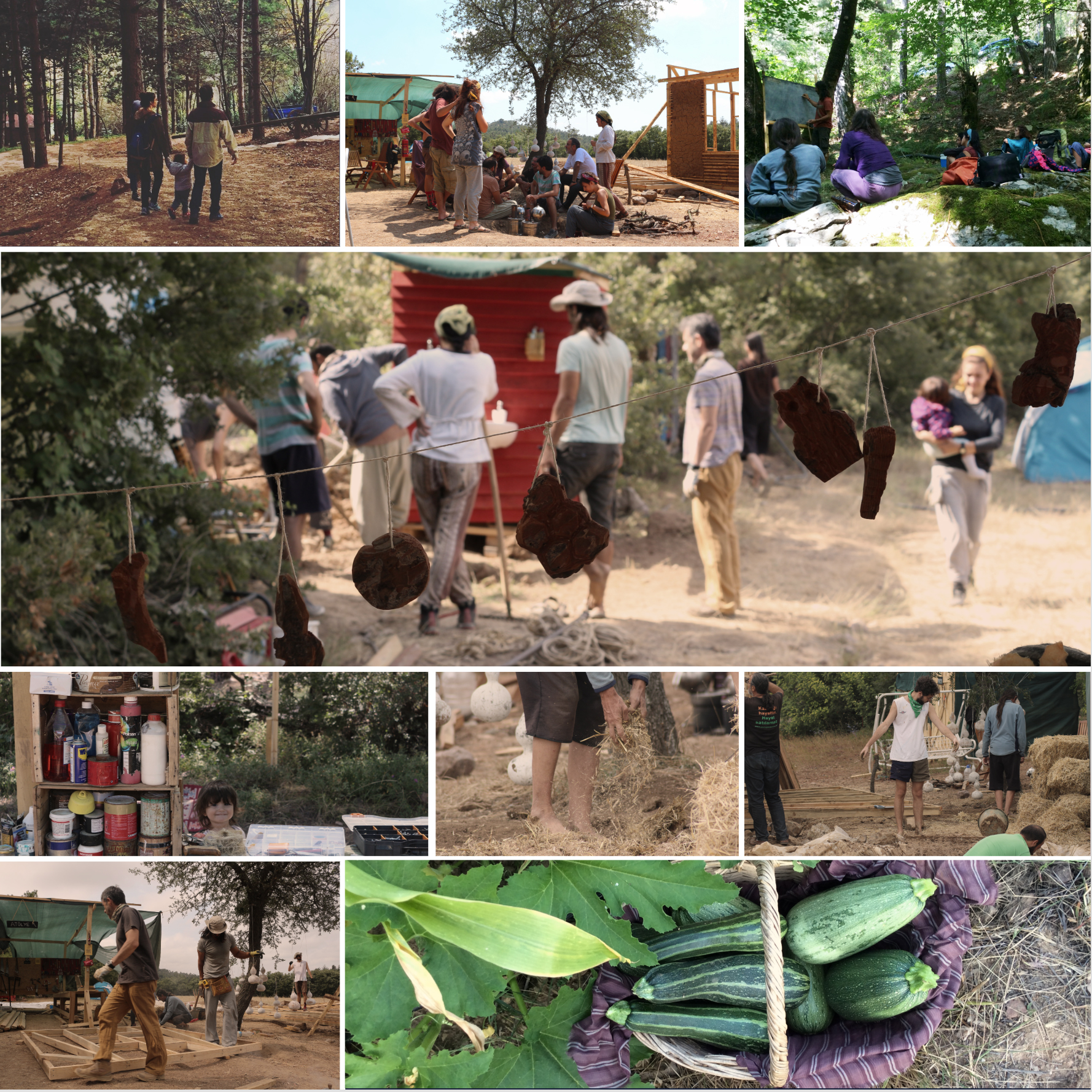
In 2010, Kübra and her partner Melih — both artists, both restless in Istanbul — made a decision that most people consider and then abandon. They left the city entirely. They found land. They built a house with their own hands, using earth insulation and mixed techniques, no electricity during construction, finished in three months. They called their studio Harmonia and lived off-grid for six years: solar panels, rainwater collection, a composting system, a small wetland to filter kitchen water back into the soil. They grew their own food and planted trees. They made bread. They raised a child.
Melih wrote a book about ecological building techniques in 2016. It became widely read across Turkey.
What they had wanted, Kübra explained, was not just a simpler life but a learning community — a place where people could come, connect with nature, and make things together. And for a time, that is what happened. Workshops on ecological design, on art activism, on the traditional crafts of local women's cooperatives who had been making things for centuries but had never been asked to think about contemporary context. Lectures. Residencies of a kind. A community that gathered around a piece of land and then dispersed, changed.
The loneliness was the one thing they had not anticipated. Istanbul had given them an artist community dense with people they loved. The forest gave them everything else and took that away.
Making the Invisible Visible
The series that brought Kübra to international exhibitions began with an irritation.
In art history classes, she kept noticing the language: women artists. As if the qualifier were necessary. As if the default artist were something else. She decided she would paint them — not to illustrate a thesis, but because she felt a genuine obligation. These people had made remarkable work under circumstances that were designed to stop them, and most of them you would not recognise on the street.
She researches each subject deeply before touching the iPad. She reads interviews, letters where they exist, documentary material. For Hilma af Klint, she started and stopped — she could not find a reliable portrait, could not confirm the colour of her eyes, could not make her real enough. She set that one aside. Maybe she will find more material one day.
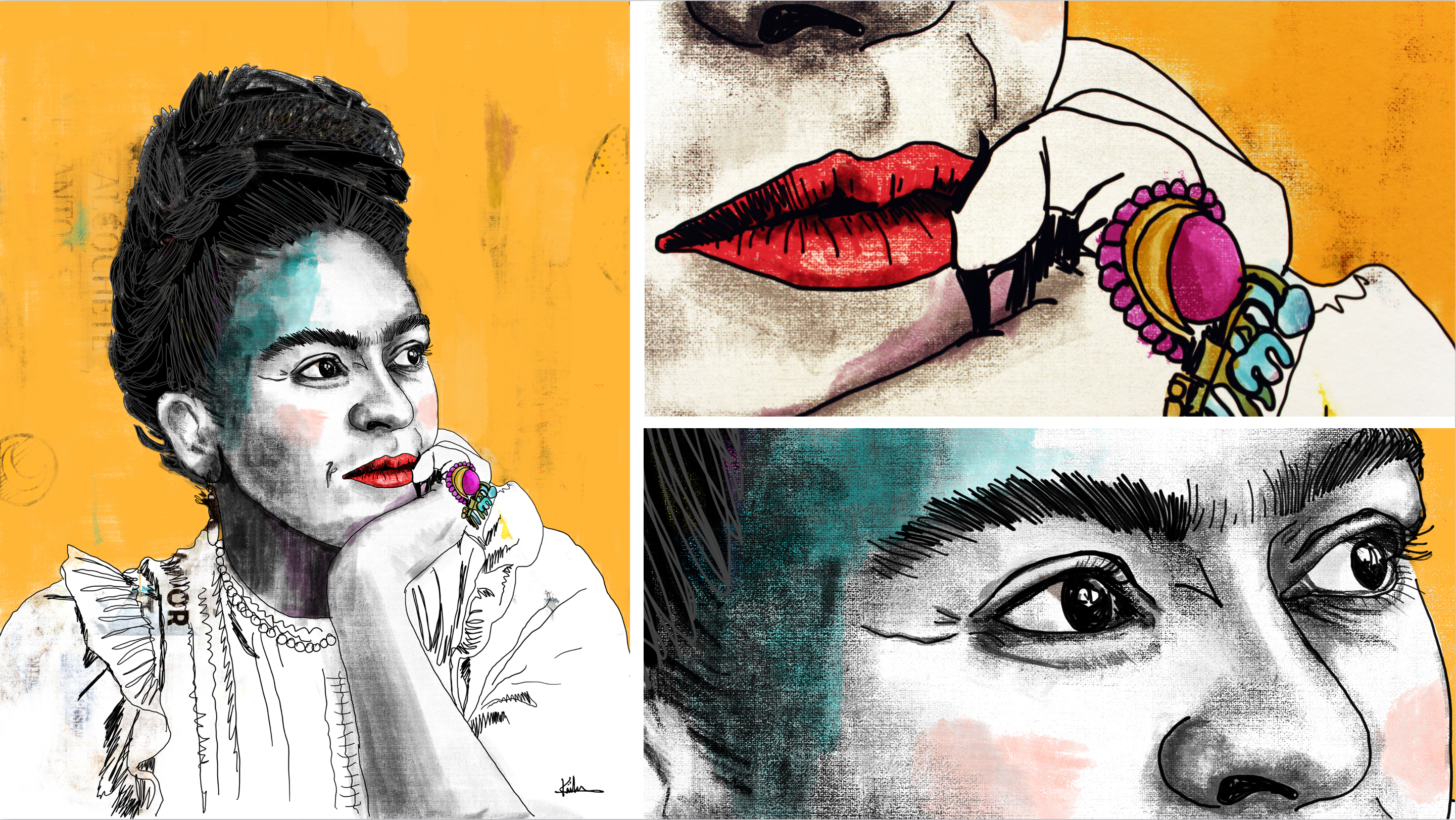
For Frida Kahlo, she used photographs as a starting point but deliberately changed the expression. In all the photographs, she found pain. She wanted to give Frida something she had not often been given: a witty look, something hopeful. Whether or not Frida ever looked that way in life is not the point. It is what Kübra felt the work required.
By working on portraits of women artists who were marginalised in art history but whose value has been recognised years later, she aimed to create an exhibition that not only paves the way for contemporary women artists but also defines their perspectives, conveys their philosophies, and allows us to reconnect with them. Each finished portrait is accompanied by printed text and a QR code. She wants visitors to leave knowing not just a face but a philosophy, a struggle, a life.
Indigenous, Imagined, and Real
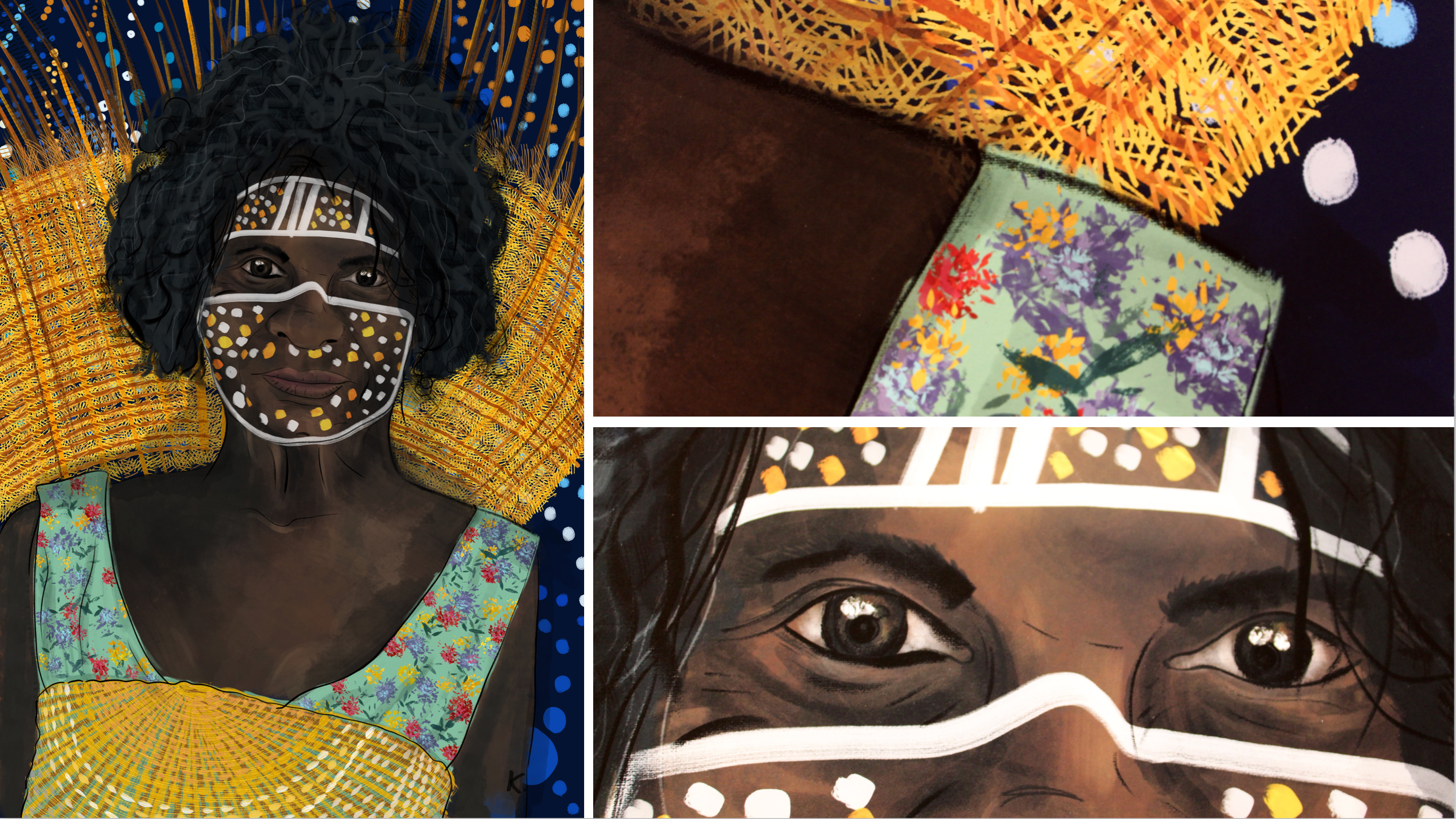
The second series — Wisdom Keepers — works differently.
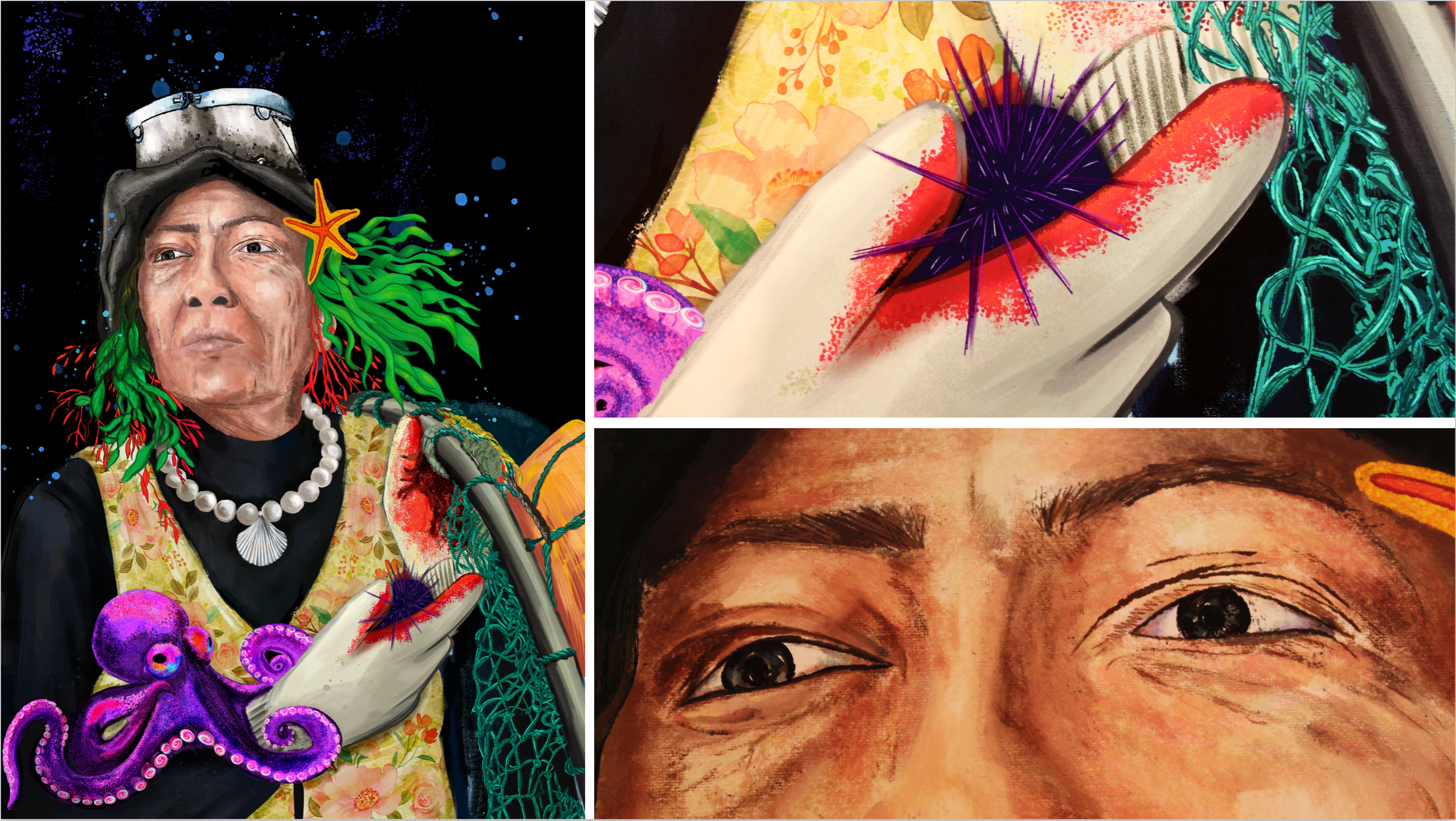
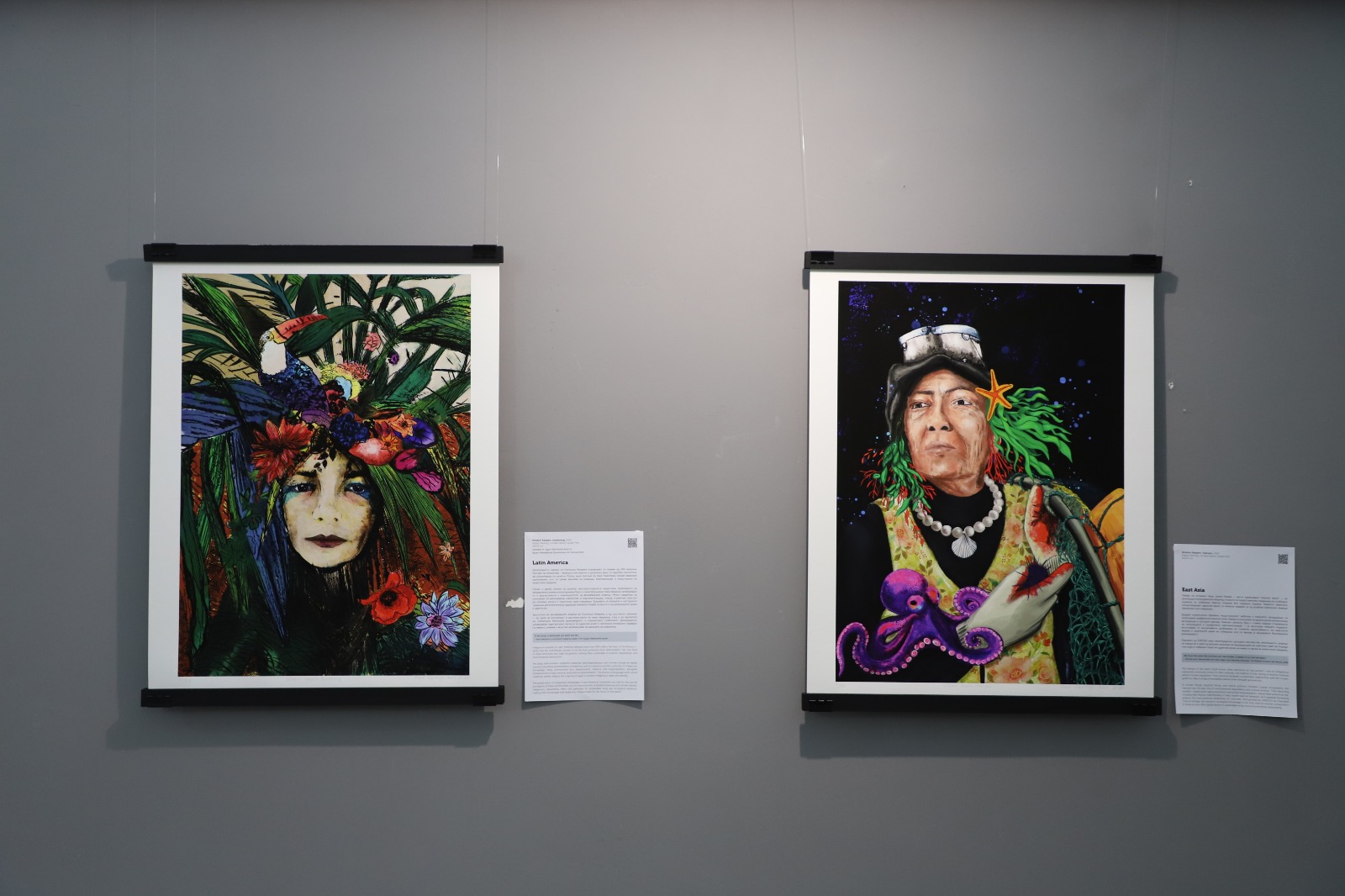
In Kübra's words: In recent years my main focus has been on the women of indigenous communities. Despite increasing recognition of their rights, many indigenous peoples still face challenges in representation, justice, and continuity. At the same time, they are the custodians of ancestral knowledge that has been preserved and transmitted for generations — knowledge that holds vital relevance in today's ecological crisis. Women, in particular, occupy a central role as both the primary carriers of this knowledge and as individuals subjected to layered forms of discrimination. Through art, storytelling, and cultural expression, I seek to make their heritage visible, and inspire collective awareness. It is my way of honouring and empowering those who have safeguarded this wisdom for centuries.
Here, Kübra is not reconstructing actual individuals but imagining them — composites built from extensive research into clothing, tattoos, hairstyles, documented photography, interviews with foundations that work alongside these communities. The Haenyeo divers of South Korea, who collect from the ocean floor without oxygen tanks, taking only what they find with bare hands. San people of the Kalahari. Arctic communities. Aboriginal Australians. Native Americans. A Romani woman from Europe.
One of the works won an award at the Busan Environmental Art Festival.
River, a fellow VSG member and digital artist who also works in Adobe Fresco, raised something important during the discussion: the growing difficulty of explaining that digital work is handmade. Open calls increasingly ban "computer-generated art" without distinguishing between an AI prompt and the thousands of hours of layered mark-making that go into a work like Kübra's. The cultural confusion between digital and automated is real, and it is costing some artists their exhibitions.
Kübra's answer is the paper. When people encounter her work printed on archival stock — the texture, the weight, the way light moves across the surface — they do not think about software. They think about painting. The revelation that it was made on an iPad arrives afterward, and by then they have already stood close to it and felt something.
Kübra continues to develop the project; she wants to bring together painting (digital and traditional), video, sound, and spatial installations to create a multi-sensory environment — an exhibition not to be seen only, but to be experienced. Over time, these works and portraits are also intended to form the basis of an evolving archival narrative.
What the Forest Left Behind
Kübra and Melih left the land when their daughter needed a school. The house is still there. They visit.
Near the end of the session, someone asked about it — whether it could become something again. The question opened quickly into something larger. A residency. Artists coming for a summer, learning to live differently for two weeks, being left to figure some of it out on their own. Kübra teaching what she knows about systems, materials, food, land. Then going home to the city.
She did not dismiss the idea. She said she would need to think about it.
The knowledge she and Melih accumulated over six years — about building, growing, making, teaching — is the kind of knowledge that tends to disappear when the people who hold it return to ordinary life. It would be something, to find a form for it. To make it available without having to live it again full time.
That, perhaps, is also a kind of portraiture.
Kübra's life in the woods: Watch on YouTube
VSG artist presentation