
Where You Stand: On Migration, Stitch, and the Art of Making Together
A conversation with Maren Götzmann, Brisbane and Berlin-based artist, from a recent Virtual Studio Groups session.
Maren Götzmann is a Brisbane and Berlin-based visual artist working across drawing, printmaking, artist books, and textiles. Her practice explores dis/placement, migration, and the positioning of humans within the world — how people situate themselves geographically, culturally, and philosophically, especially those who have moved between countries and keep moving. She studied in Munich, migrated to Australia with her partner Joachim Froese in 1991, and completed a second arts degree there, combining studio practice with art history. She has been moving between Brisbane and Berlin ever since.
She was joining the VSG session from Valencia, where she and Joachim were doing a residency at The Local AIR, and she presented a varied body of work spanning several decades — textile pieces, numerous drawing series (some of them ongoing), and work with a long-running collaborative collective. The conversation that followed touched on the art market, the algorithm, and what it means to make work that is genuinely built from and made for exchange rather than individual success.
Heimat
A recurring thread in Götzmann's work is the German concept of Heimat — a term with no precise English equivalent. It gestures toward belonging and origin, but extends beyond geography to encompass cultural, social, and emotional rootedness. For an artist who has lived across multiple countries and continues to move between them, Heimat is not a fixed condition but an open, returning question.
Her triptych Lifelines (2008) reflects on how those forced to leave their Heimat sustain and reconfigure their sense of continuity, renegotiating their place in the world. The three 100 × 80 cm works, painstakingly hand-stitched and reverse-appliquéd, unfold as quiet meditations on the paths one chooses — or is fated with — over a lifetime.
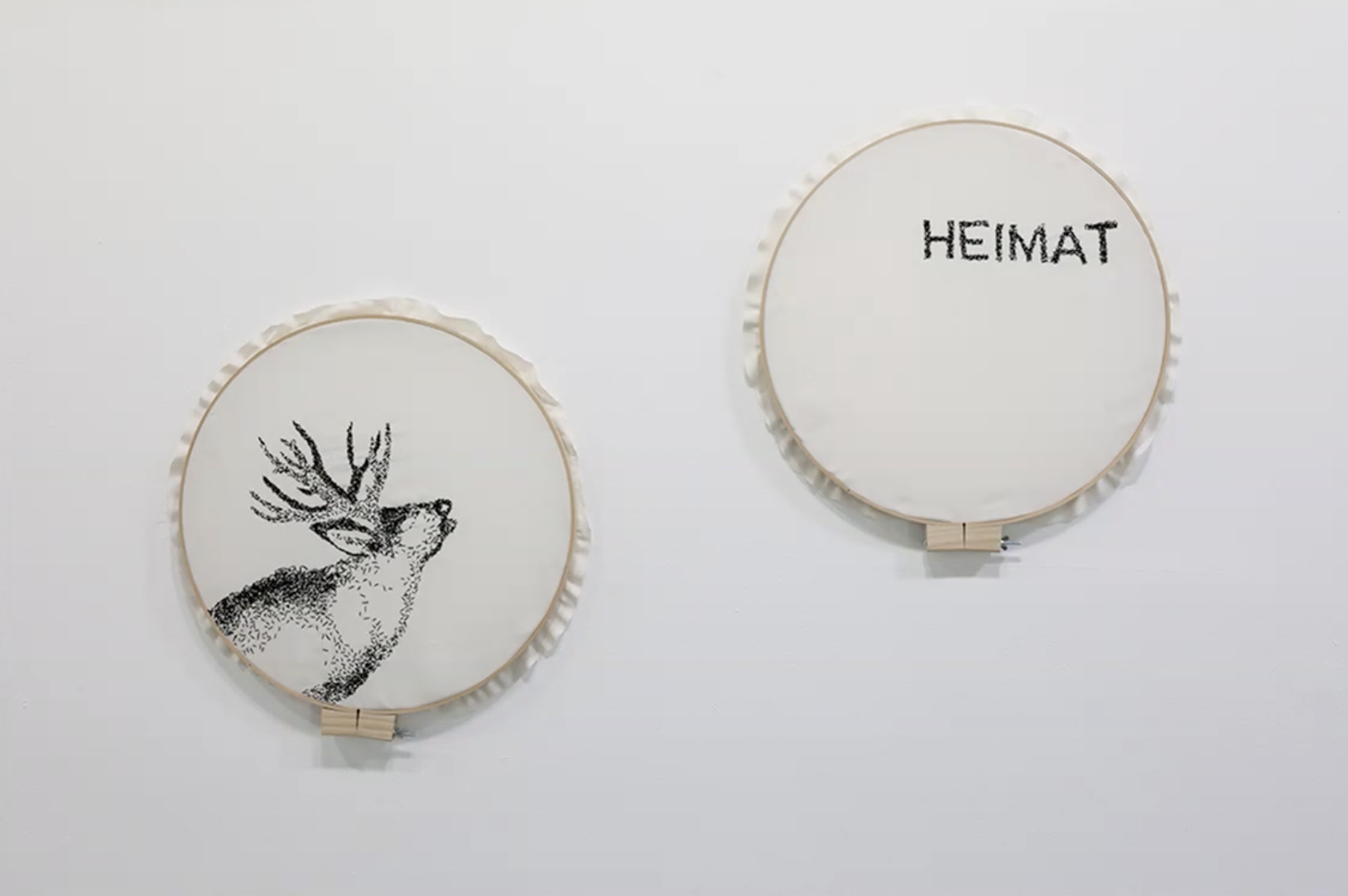
The motif of the roaring deer — a traditional emblem of Heimat in Germany — reappears in Heimat (2017), a two-part work rendered in black silk thread on white silk fabric, each held within a 40 cm embroidery hoop. Here, Götzmann uses stitch as a form of drawing, a fluid approach that allows her to move seamlessly between textile and line. The stag, at once familiar and faintly sentimental, may still roar, but its authority has waned. Heimat, for Götzmann, no longer resides in a singular place, but across many.
Cloth and Memory
Touched (2020) is among the most personal works Götzmann presented. Composed of 40 × 40 cm fabric squares, each brings together fragments of intimate garments donated by close female friends — nightgowns, underwear, bed sheets, tablecloths — shaped by proximity to the body and the rhythms of everyday life. Some of these women have since passed away, lending the work an added layer of poignancy. Assembled by hand, the composition recalls an abstract quilt yet remains deliberately unquilted: the seams are left visible, the joins unhidden, allowing each fragment's history to remain legible. The result hovers between artwork and memorial, a quiet act of holding and remembrance.
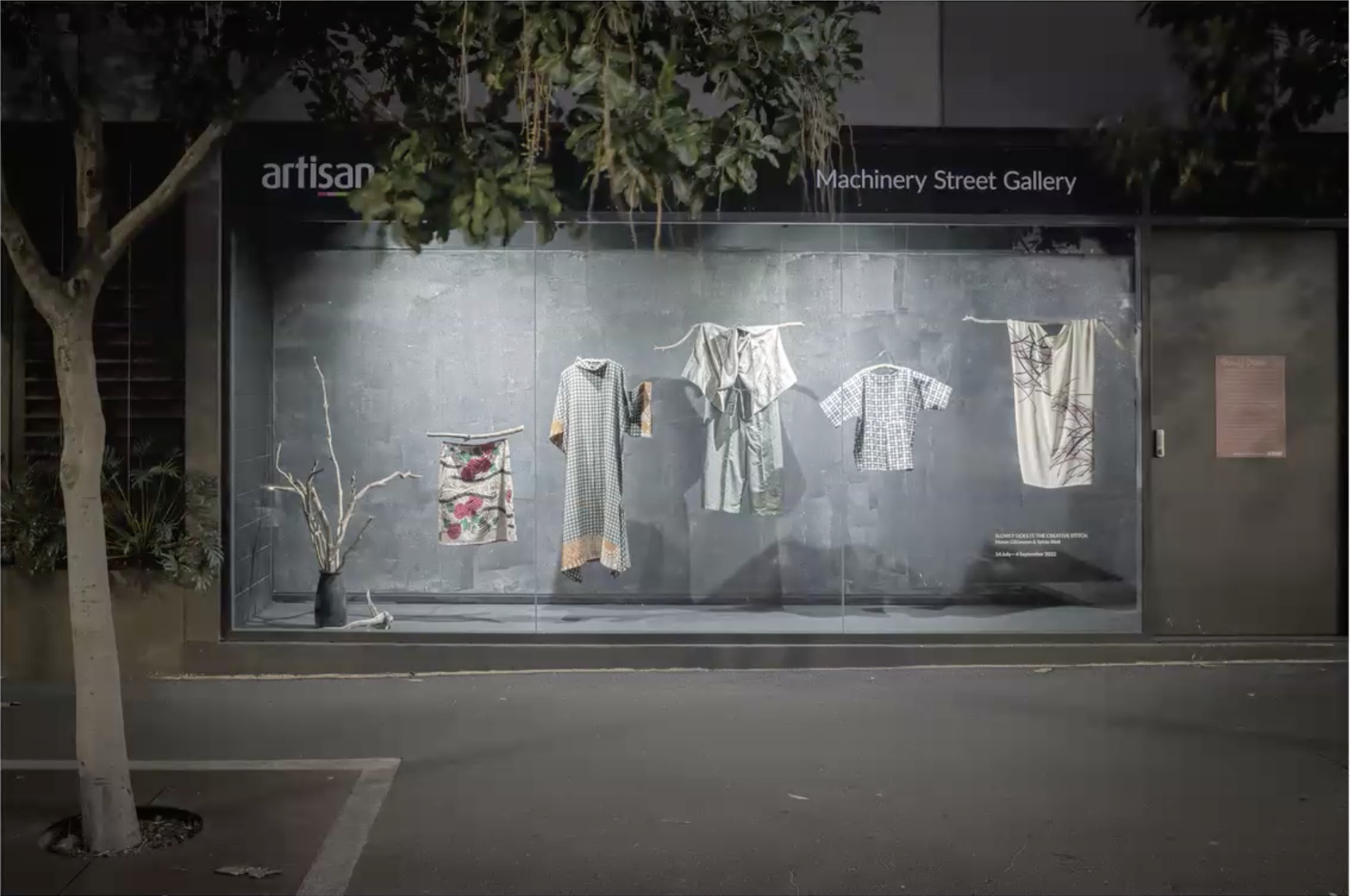
Alongside this deeply personal practice, Götzmann collaborates with textile artist Sylvia Watt, united by a shared commitment to natural materials and to processes of reuse, reinvention, and upcycling — an approach that stands in deliberate counterpoint to the excesses of global fashion production and consumption. Their one-off wearable art works, sold through Brisbane outlets, draw on pre-used kimonos as well as recycled linen, cotton, and silk, often incorporating the Japanese boro tradition of layering and mending cloth.
Across these textile practices, a consistent logic emerges: fabric that has been worn, handled, and lived with carries traces of experience. It holds memory. And for Götzmann, that is something worth attending to.
The Only Constant
Amid years of movement, drawing has remained the most consistent thread in Götzmann's practice. Working primarily in small formats — 15 × 15 cm pieces she can carry, transport, and resume across cities — she has developed a portable, ongoing way of seeing. The Berlin Diaries, begun in 2014 and continuing today, bring together drawing, printmaking, watercolour, and collage in entries that accumulate at times daily. Rather than documenting events, they register impressions: shifts in attention, fleeting conditions, the texture of lived experience.
"The only component that is constant is my drawing. I mostly work in small formats — drawings I can take with me wherever I go."
This question of position — of where and how one stands — also runs throughout her work consistently. The various Standlines and Standpoints series take the central metaphor of her practice — where you stand morally, philosophically, ethically — and render it literally. One of those is an ongoing performance-based piece: wherever she is, she places a circle of silk string on the ground, steps inside it, and photographs herself. The gesture is simple. Its accumulation over years becomes a kind of durational map of displacement — every location where she paused long enough to mark it. In the series of drawings Standpunkte und Standlinie (2011) and Standlinie P 1-8 (2018), position lines remain constant while others disappear, at times entirely; new lines, obscure and marked with uncertainty, emerge while others are firm and pronounced. Standpoints sit steadily, float, or are about to leave the page.
"My drawings reflect a personal, subjective understanding of my place in the world."
Leaving the Ego at the Door
For more than a decade, Götzmann has been part of NightLadder, a Brisbane-based collective of five artists who meet every Friday to make work collaboratively, primarily in the form of artist books. Their approach runs counter to the individualism that shapes much of the contemporary art world.
In one of their early artist book series, The Anarchist Notebooks (2014), their process is both simple and radical: each artist begins working — drawing, collaging, printing — into a pre-used, partially filled notebook, then passes it on. The next artist responds directly to what is already there, extending it, and at times even obscuring it partly or entirely. A page is only considered complete when all five members agree.
"You have to leave your ego at the door."
No mark is too precious to be overwritten; no gesture is protected. The process depends on a shared willingness to relinquish ownership, grounded in mutual trust.
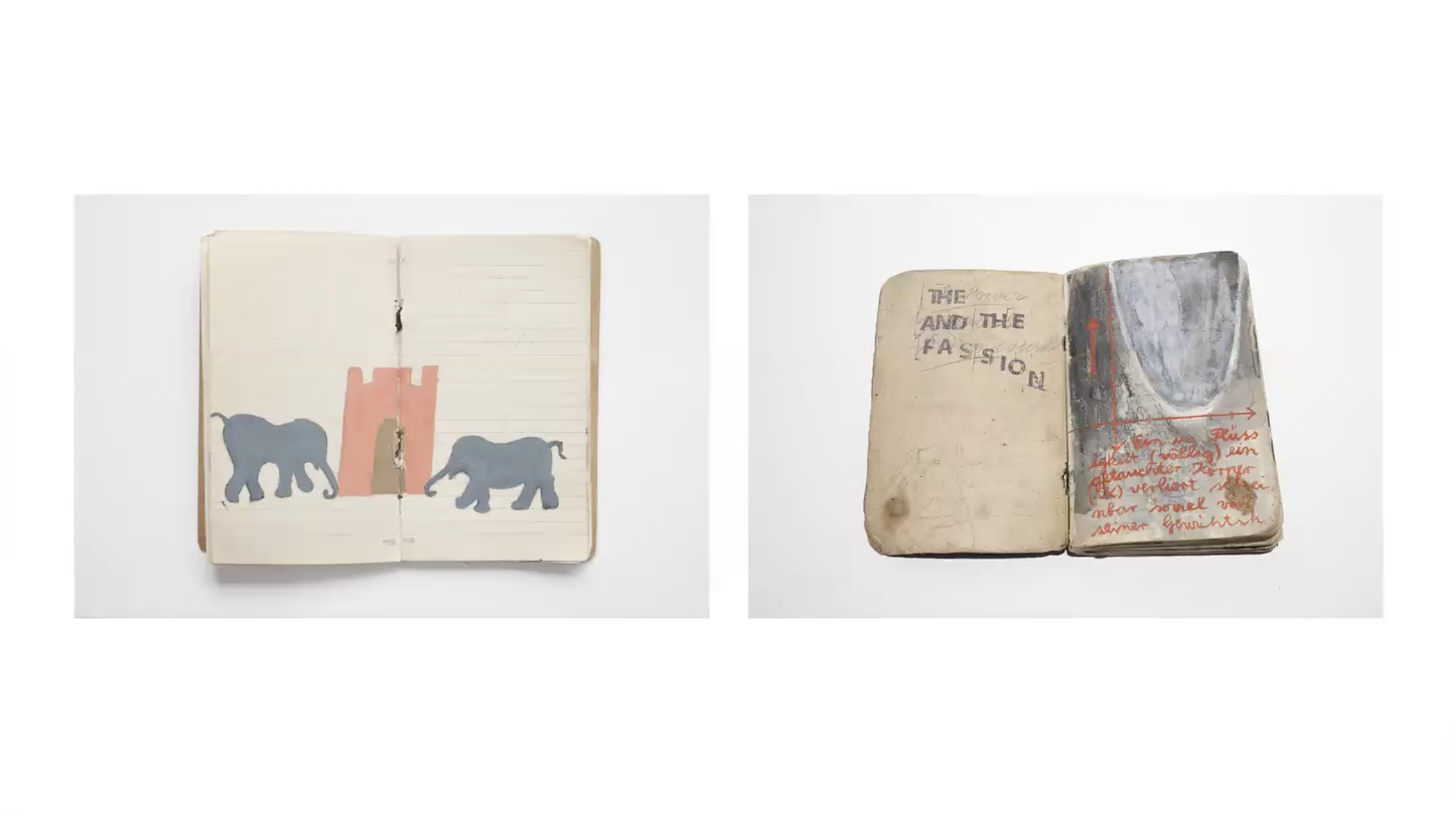
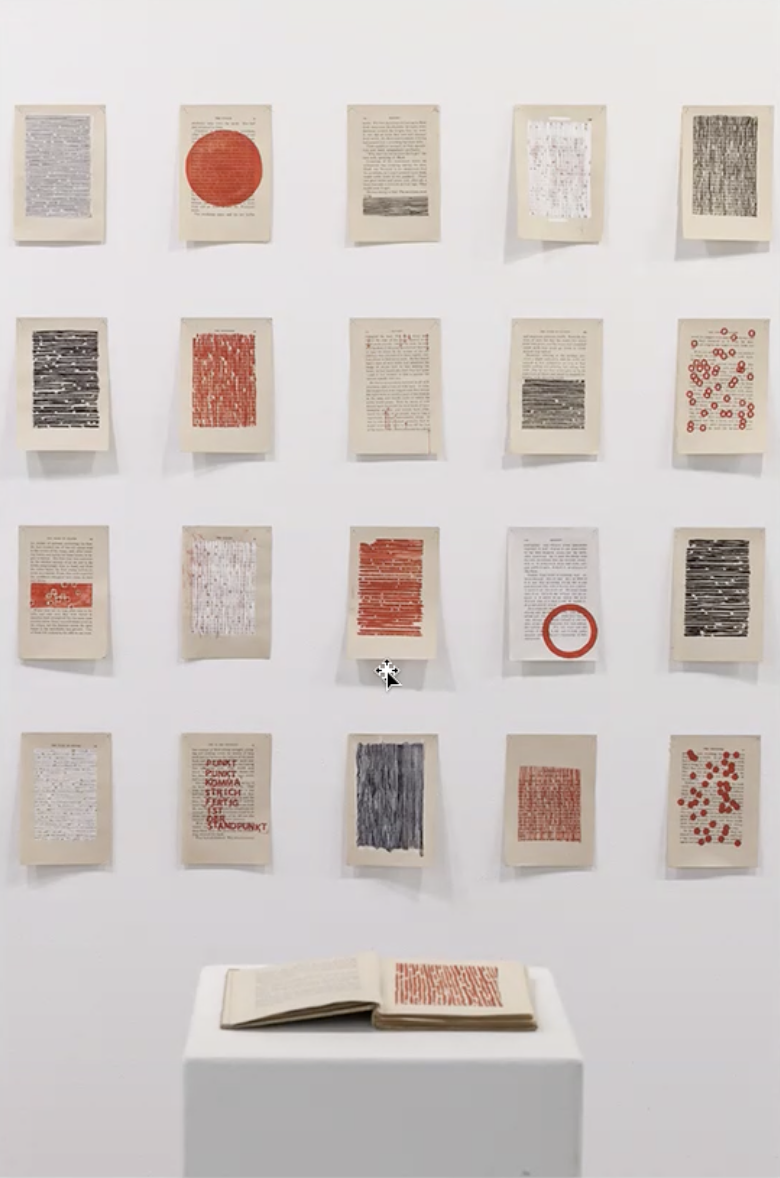
NightLadder maintains a steady, unhurried rhythm, mounting an exhibition every two years. Over time, their work has taken on varied forms: small, repurposed railway notebooks sourced from a deceased worker's estate; 100 × 70 cm large-scale mixed media drawings assembled as wall pieces; manipulated postcards; or chalk-based notebooks with a strong emphasis on collage. Not every experiment succeeds, and Götzmann is candid about the projects that fall short. But this openness — to failure as much as discovery — is central to the group's longevity. Process, rather than outcome, remains the guiding principle.
Implicit in this way of working is a critique of the broader art system. Where the market privileges singular authorship, recognisable style, and commercial clarity, NightLadder operates otherwise: through collective authorship, shared vision, and works that resist attribution to any single hand. That the collective has endured for so long is, in itself, a quiet but persuasive argument for another way of making art.
Making It Together
The discussion that followed Götzmann's presentation moved into territory that the group returns to often: how to maintain a serious practice in a media environment that demands constant output. The algorithm requires volume; deep work requires time. The two are not easily reconciled.
The VSG group itself was named as a possible ground for this kind of practice — a place to show work in progress regularly, to build the habit of making work visible before it is finished or resolved. Not a performance of completion, but a practice of showing up with what you have.
This article is based on a presentation and discussion from a Virtual Studio Groups session on 19 April 2026.
VSG artist presentation