
Where Each Stitch Breathes — Britta Marakatt-Labba
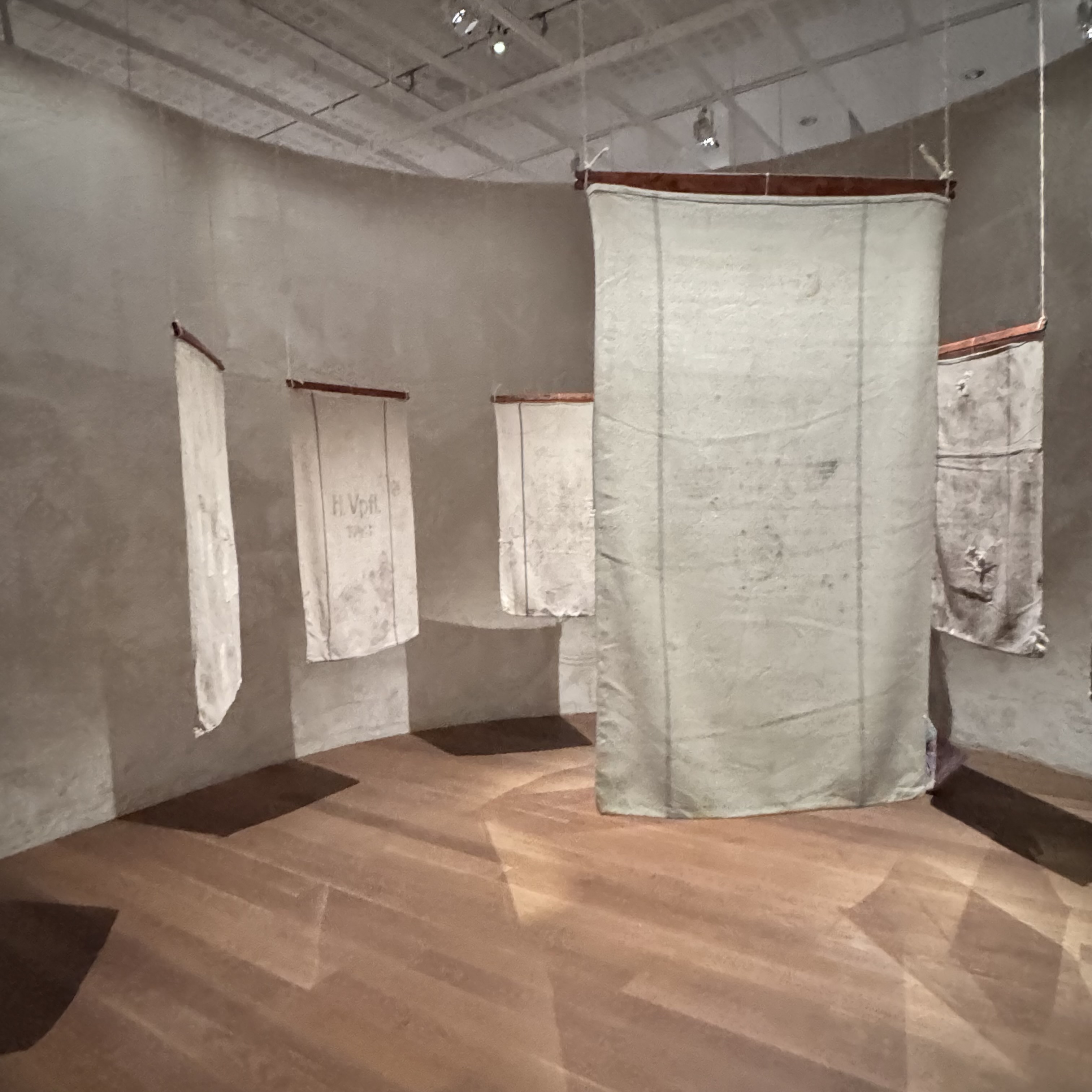
WHERE EACH STITCH BREATHES / JUOHKE SÁKKALDAT VUOIGŊÁ
14 June – 30 November 2025
Moderna Museet, Stockholm
Exhibition reflection for Virtual Studio Groups / Digital Art Magazine
Photos © Gordana Zikic
Text: exhibition reflection by Gordana Zikic
Text reference used for editorial and educational purposes from Moderna Museet, Stockholm, "Britta Marakatt-Labba: Where Each Stitch Breathes," exhibition description (2025)
The exhibition Where Each Stitch Breathes by Britta Marakatt-Labba made a very strong impression on me. Her approach to materials and the precision of her work resonated deeply with some of my own artistic concerns, especially my use of textile, embroidery, and drawing. The exhibition explores the relation between material, gesture, and narrative in a way that felt both conceptually and emotionally close to my own practice.
Marakatt-Labba was born in Idivuoma, Sápmi, and has been creating work that reflects on Sámi life, culture, and history for almost five decades. Her pieces range from small embroidered scenes to large-scale installations and graphic works. The monumental 24-meter-long embroidery Historjá (2003–2007) is the central work of the exhibition. It unfolds as a continuous visual narrative of Sámi history and worldview, often compared to the Bayeux Tapestry for its scale and detail.
The exhibition highlights how Marakatt-Labba transforms the whiteness of the fabric into an active element of the composition. The unstitched surface often represents snow or light, yet it is never an empty space — it becomes part of the drawing, a rhythm that allows the embroidered figures to breathe. This careful balance between presence and absence creates a visual tension that draws you in and holds you.
What struck me most was the way she uses thread as line, as if she were drawing directly onto the fabric. Her figures — reindeer, people, boats, birds — are rendered with an economy of means that belies the extraordinary density of meaning behind each image. The works are simultaneously folk art and contemporary art, accessible and deeply layered.
Her use of duodji — the traditional Sámi craft practice — as a conceptual and political framework is also significant. She does not separate craft from art, or tradition from contemporaneity. The work insists that these distinctions are false, or at least unhelpful.
I came away thinking about the politics of material: what it means to choose a medium that has historically been dismissed as 'women's work' or 'craft', and to make from it a body of work that demands the full attention of the contemporary art world. Marakatt-Labba has done this without compromise, across five decades.
For any artist working with textile, drawing, or questions of cultural identity and narrative — this exhibition is essential.
To see more about this exhibition on the official website of Moderna Museet, Stockholm