
The Weight of What You Make: On Wind, Light, and Slow Accumulation
A conversation with Yann Courté, Gordana Zikic, Bosko Begovic and Kai Rennes, from a recent Virtual Studio Groups session.
Yann Courté · Kai Rennes · Gordana Zikic · Bosko Begovic
There is a question that runs underneath a great deal of artistic practice but rarely surfaces in the language artists use to describe their work: what do you do with it all? Not the conceptual question — what does it mean, where does it fit — but the simpler, harder one. Where does it go? Who keeps it? How much space does it take up, and what do you owe it?
A recent VSG session moved, without quite planning to, through exactly this territory. Three artists — Yann Courté, a photographer based in France; Gotza, and Bosko, both interdisciplinary artists based in Barcelona; and Kai Rennes, a Swedish-Finnish artist working between Stockholm and Barcelona — each arrived at the session carrying the weight of recent work: a festival exhibition, a photography evening, a decades-long practice quietly crystallised into a book. And in the conversation between them, something honest emerged about what it is to carry years of making in your hands.
What the Wind Left Behind
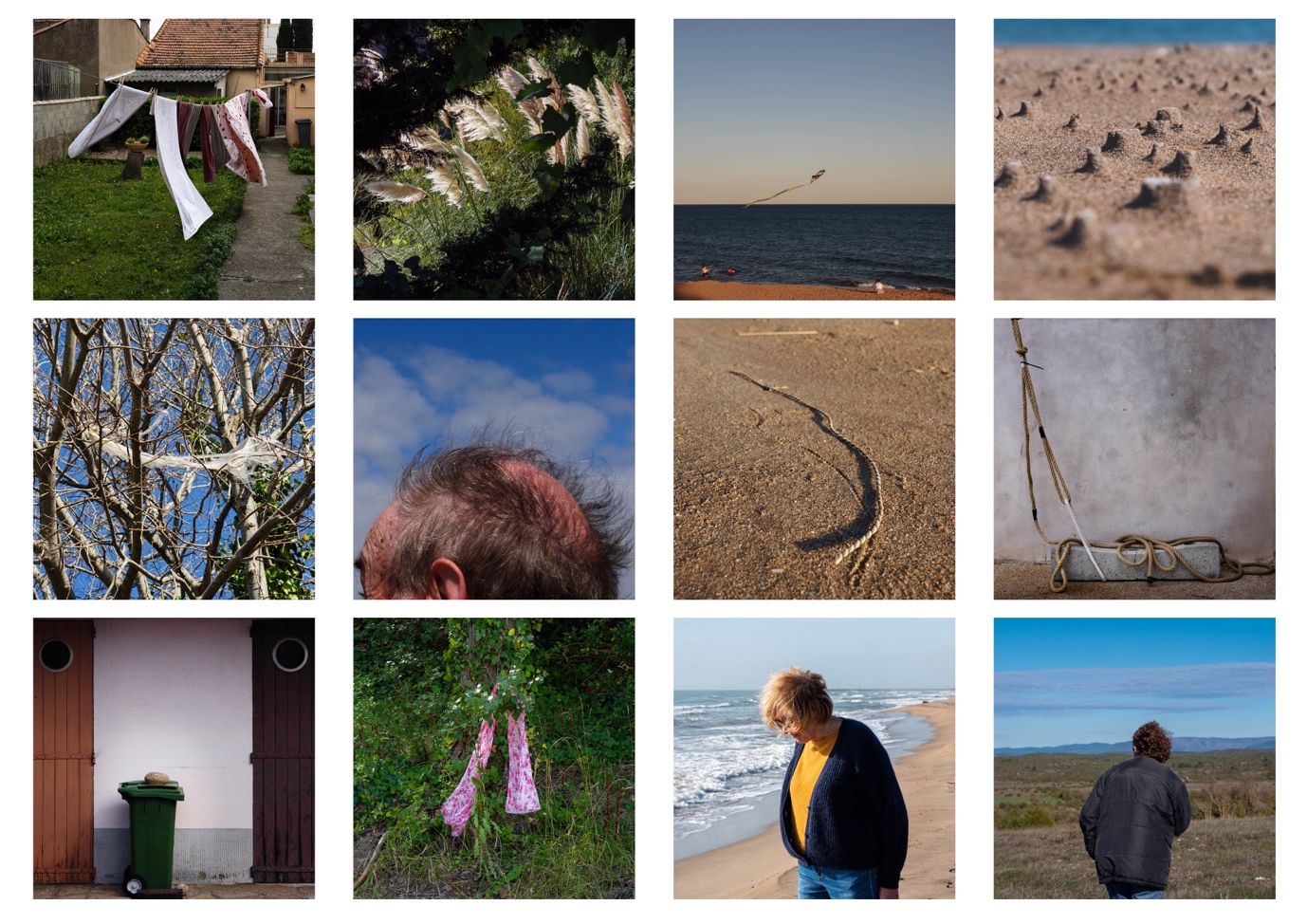
Yann Courté had just returned from a group exhibition — 45 artists, a village festival in its 25th edition, Artistes à suivre, four days and almost a thousand visitors. He had shown a series he has been building for several years: photographs of wind.
Not wind as spectacle. Wind as evidence. The series works in two registers at once — the traces wind leaves on the landscape when nothing resists it, and the traces it leaves when something does. In the first register: small sand formations where a pebble has been raised on a plinth of packed sand because wind has eroded everything around it, leaving it standing like a monument to its own accident. "You cannot guess what it is," Courté said, "because it looks like the surface of the moon or Mars or something." The image that kept drawing people in at the festival, provoking long explanations: a tiny-scale geological event, absolutely unrepeatable, found on a beach he walks regularly.
In the second register: a garbage bin weighted with a rock during a storm, a rope knotted to a counterweight, the small human improvisation of a neighbourhood trying to hold on. The same wind, the same force, but the subject is now the response — the ingenuity and the stubbornness of people who live with wind and have learned to work around it.
He framed them deliberately: black frames for the natural wind images, white frames for the human response. Not to label the division but to create rhythm. Fifty by fifty centimetres, all the same format. The alternation of black and white frames across the wall gave the series a visual beat that worked independently of the images — something closer to a score than a sequence.
For the festival he also made small prints at €10 each, sold in plastic sleeves. He came back having covered his costs, with a little left over. A modest result by commercial measure; not modest at all by the measure of what it meant to see the work in front of a thousand people over four days.
Fifteen Years of Questions
Gotza had presented at Fotoarte Barcelona the week before — a photo night with four photographers, images projected on a large screen. She had shown twenty-two photographs from a Hipstamatic series made in Barceloneta since 2011. The story of that evening, and of the work itself, is told fully in a companion VSG article. But what surfaced in the session was something slightly different: not the work, but what looking back at it had opened up.
Seeing fifteen years of images projected at wall scale — a format she had only ever known on a laptop — had created a distance she had not had before. The full selection visible at once: the colour range, the square format consistent across all of them, the way the early camera's grain was inseparable from the palette. "Now I'm looking differently at my work," she said. "I'm looking differently at how I can curate my own work. What it means. How I can choose photos from a specific time, or with specific qualities, or only water — and then rethink all the different ways of what I can do with all this."
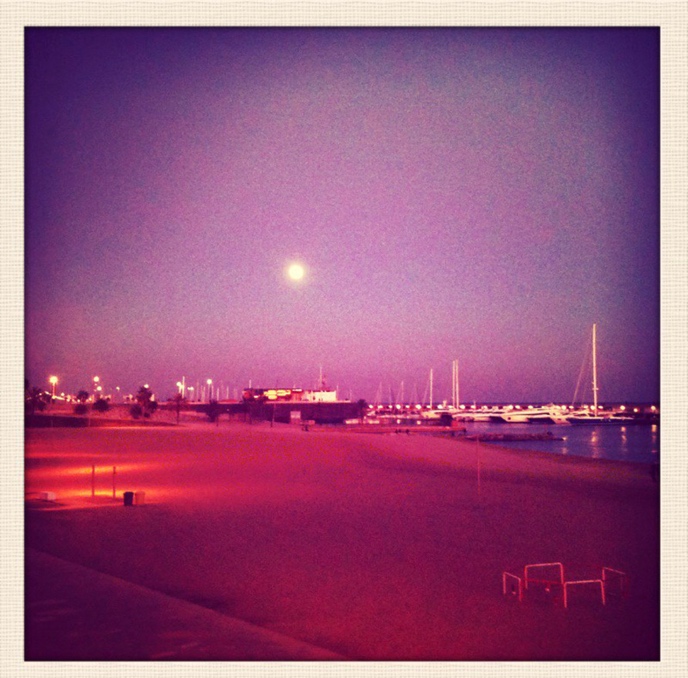
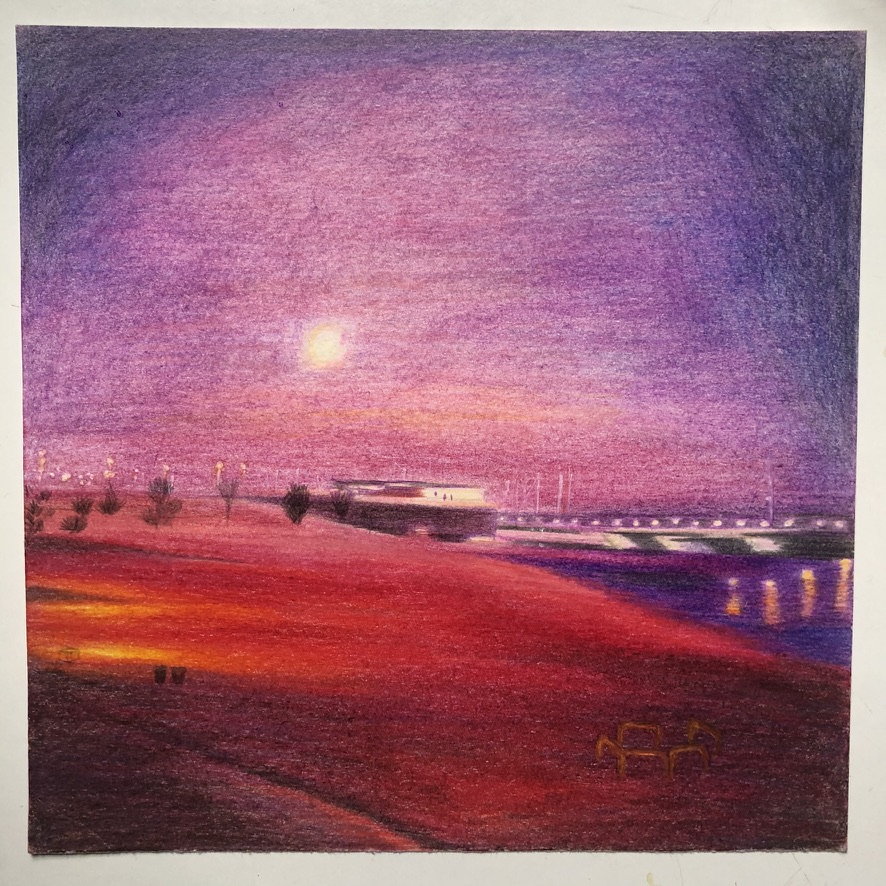
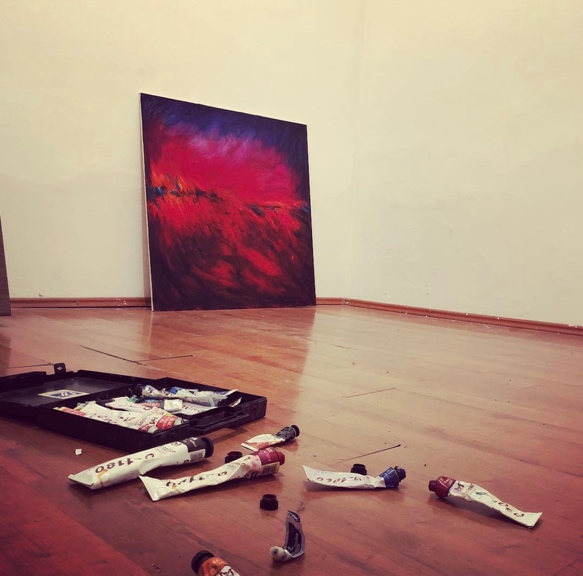
This is the question that arrives when you have been making work steadily, without designing an archive, and then something — an invitation, an occasion, a deadline — forces you to look at what is actually there. Not what you planned to make but what you did make, accumulated across years of ordinary attention. What is it? What does it add up to? How do you see fifteen years of images as a body rather than a collection? Bosko observed that the practical problem and the curatorial problem are the same problem: you need the occasion to create the distance, and the distance to create the vision. The work exists before you can see it whole.
The conversation turned, naturally, to the question of storage — the large works from student years rolled up against time, the prints from exhibition series now distributed across home and office, the economics of printing at scale. And to selling, and to consistency, and to algorithms. Saatchi Art came up. The friend who posts every week and works in a recognisable style and sells regularly was mentioned as a reference point — acknowledged without being held up as a model.
"I will post one day," Gotza said, about her wider catalogue of work. "I'm also still waiting for that day."
There was laughter. But the laughter was the laughter of people who understand that making and showing are genuinely different disciplines, and that many artists — serious ones, with decades of rigorous work — have never quite bridged the gap. The conversation did not offer a solution. It offered something more useful: the recognition that the gap is real, that it is structural, and that you are not the only one sitting on work that deserves to be seen.
All Things Shining
Kai Rennes joined from the Swedish countryside, where he has a studio. He is based in Stockholm and moves between Sweden and Barcelona. He showed two things: a new sculpture in progress, and work from a practice that spans thirty years.
The sculpture is made from small optical prism cubes — each one catching, refracting, and scattering light differently according to the angle and whatever light is in the room. He is assembling them into a larger form, a kind of constructed presence, titled All Things Shining. The prism cubes, he said, are really shining for him — not as metaphor but as physical fact, as something that changes what is around it by simply being present in it.
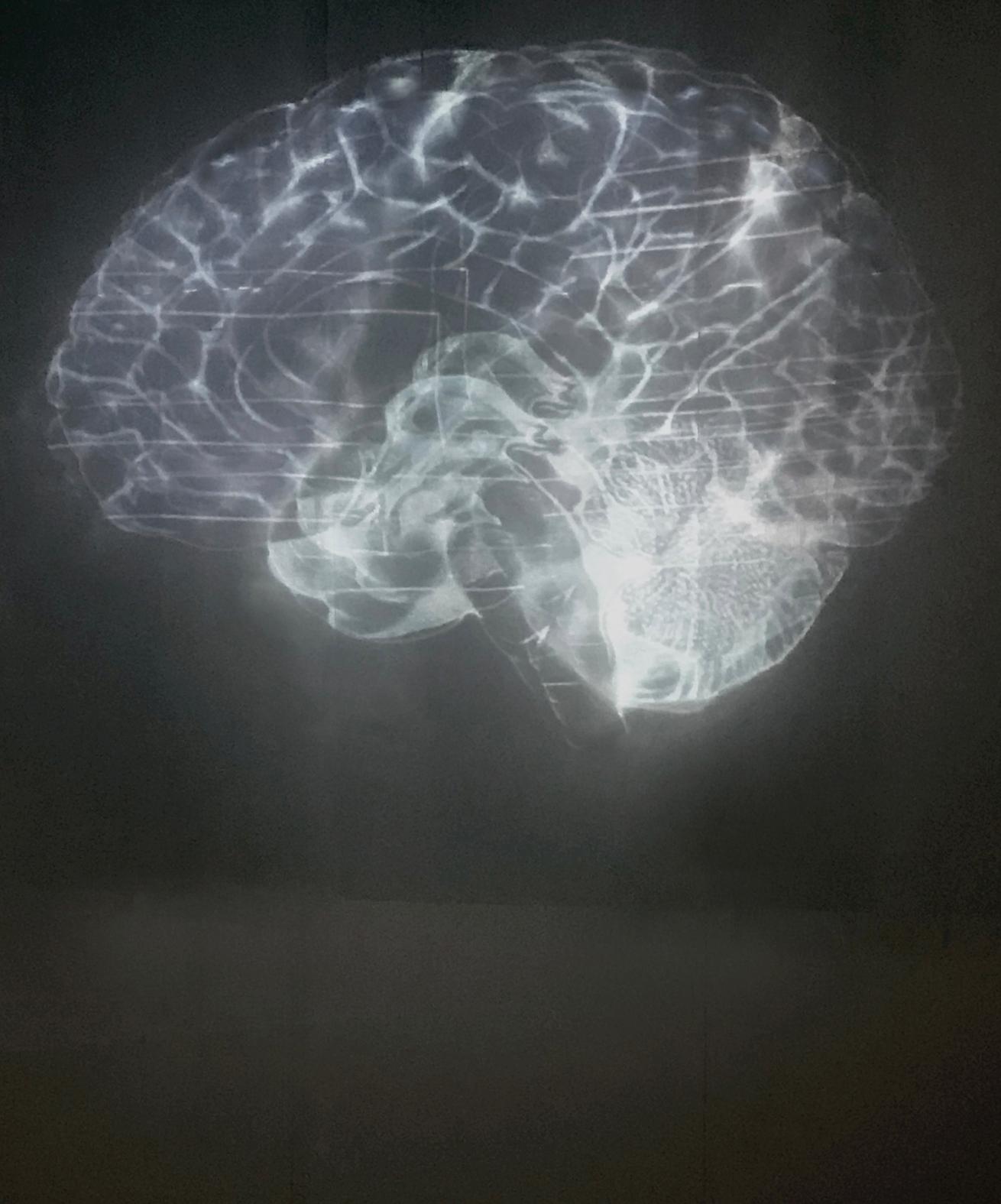
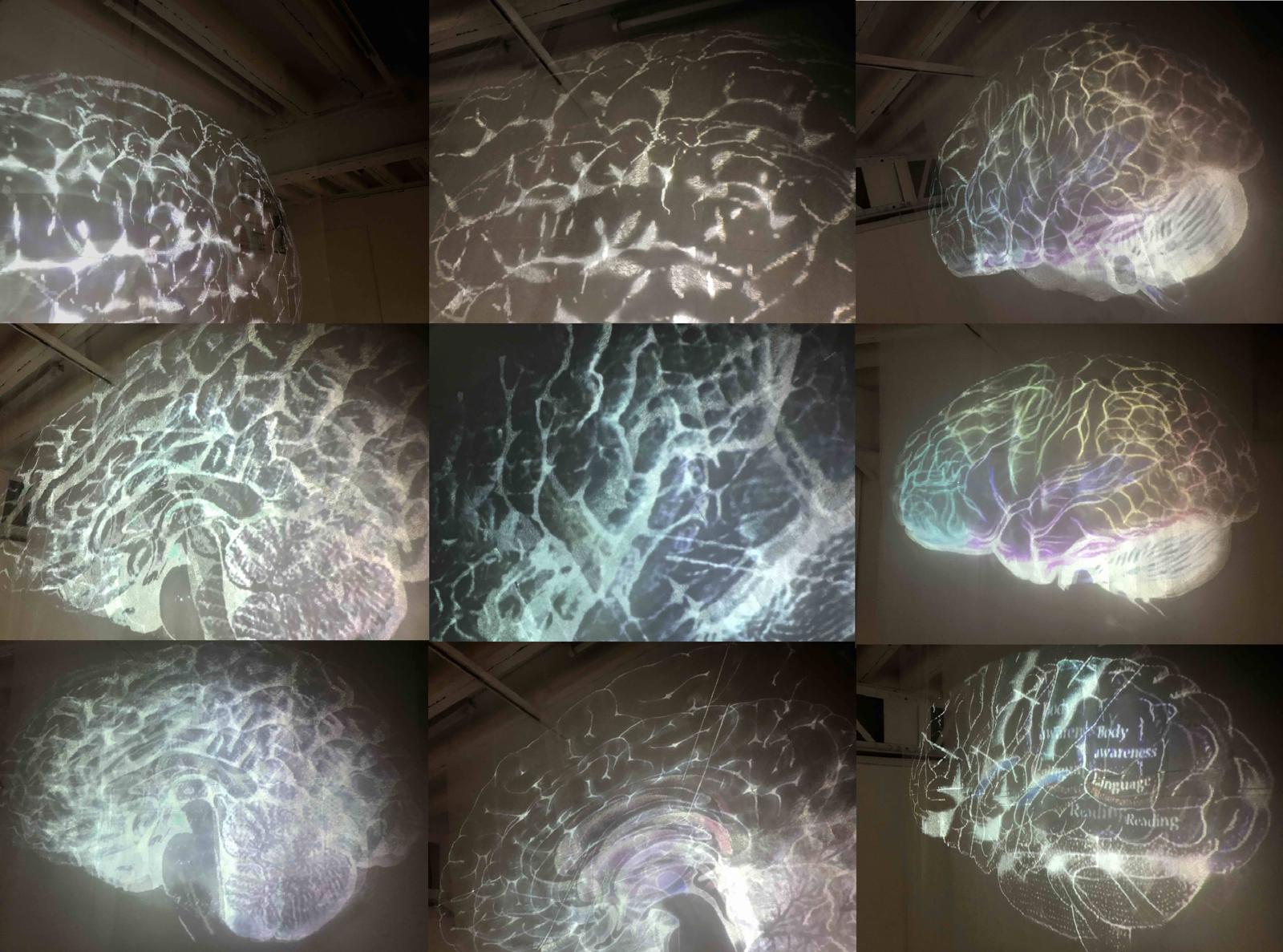
This is consistent with a practice that, across photography, video, and installation, has been centrally concerned with vision itself — with what it means to see, what an image does to the person looking at it, how meaning arrives in the encounter between a viewer and a surface. His 2019 video installation Gray Matter, shown at Youkobo Art Space in Tokyo, projected animated scientific images of human brains onto layers of Japanese washi paper hung from the ceiling: the brain slowly changing form and colour, becoming almost living, the layers of paper creating a three-dimensional effect as if depth were something you could walk into. The question underneath it — what is the substance of perception, where does it live — is the same question the glass cubes are asking in a different material.
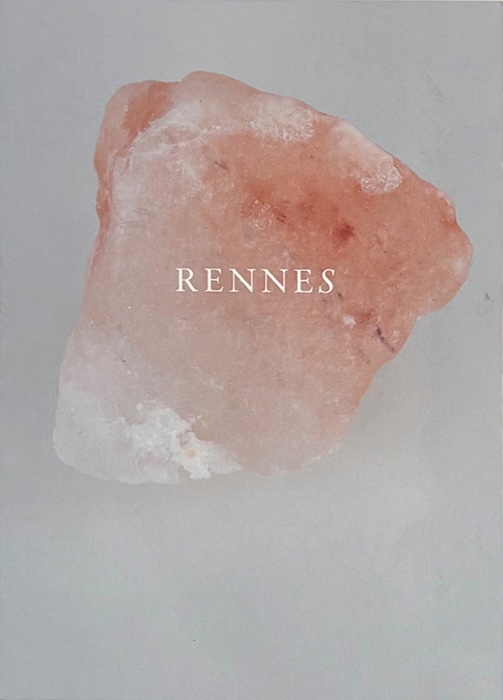
In 2025, this body of work found a form it had not had before: a book. Kai Rennes: Photography, Video, Installations, published through Bigger Splash, 126 pages, hardcover, with texts by art historian Juha-Heikki Tihinen and curator Zsolt Kosma alongside Rennes' own writing. Tihinen describes the work as an investigation into "the meaning of vision and knowledge in art" — fascinated by the encounter between different worlds, the moment when things acquire entirely new dimensions of meaning. The book focuses on the installations, videos, and photographs. The paintings, Rennes suggested, are a different conversation, still in progress.
Bosko has written texts about Kai's work — a body of writing that will find its own VSG article, pairing the texts with images of the work. The two also share an unfinished collaboration: a video project exploring movement and perception, Bosko moving through space with a camera — fast, slow, circular — the footage creating a vertiginous shift in how a body in motion is felt rather than just seen. It is not finished yet.
The book is available at Konstig Books, with a preview available there so you can see something of its scope before ordering.
What Colour Knows
The session ended somewhere none of the three had planned to go: inside the eye itself.
Kai Rennes has taught colour theory in courses over many years — exercises in perception, coloured paper studies, the slow discipline of learning to see the small differences between shades. What teaching colour had given him was less the theory than the mystery: the more he knew, the more he understood how much remained unknown, and how much of what we call seeing is something closer to agreement.
He mentioned a podcast: Chromosphere, made by Ed Charbonneau, available on Spotify, Apple Podcasts, and elsewhere. One detail from it had stayed with him. There are 25 photoreceptor cells in the human eye — distinct from the cones and rods — whose function science has not yet been able to explain. Not the cells we know. Something else, still sitting in the retina, still doing something we cannot account for. Whether these cells are relevant to how some people perceive colour differently from others, whether they explain the people who seem to see what others cannot, remains entirely open.
Gotza connected this to something she had read about colour vocabularies across cultures: how Inuit languages distinguish many shades of white because the distinctions carry survival information, how women statistically differentiate more shades of red than men do, how training perception changes not just what you notice but what you actually see. Colours are not only a cultural agreement — they are a biological inheritance whose depth we are still mapping.
It is a conversation that deserves more time than a single session can give it, and VSG will return to it. In the meantime, the session left behind a small library of resources worth exploring:
For colour:
- Chromosphere podcast by Ed Charbonneau — on Spotify, Apple Podcasts, and other platforms. Start anywhere; each episode is self-contained.
- A Dictionary of Color Combinations by Sanzo Wada, published by Seigensha — a Japanese reference compiling traditional colour name combinations with swatches. Two volumes. There is also a remarkable interactive version online.
For obsessive return to one place:
- Mediodía by David Hornillos — a photography book about Madrid's Atocha station, shot over three years during the midday hours, entirely within the orange-brick envelope of the building and its light. Courté mentioned it as the kind of sustained single-location work he finds fascinating.
Colour, in the end, is what all three artists in this session were circling, in different registers. The black and white frames of the wind photographs and the colour shift of the Hipstamatic series and the glass cubes that take on whatever colour is near them — all of it is about what arrives when you look, and whether you were ready for it. And the 25 cells no one has explained yet suggest that the question is not only aesthetic. It may be structural. We may be seeing more than we know.
Follow Yann Courté @memoire.courte · yanncourte.fr
Follow Kai Rennes @r_e_n_n_e_s · 32gray.com · Book: konstigbooks.com
Follow Gotza @gotza_gotza · gordanazikic.wordpress.com
Follow Bosko @mark_a_fish
This article is based on a presentation and discussion from a Virtual Studio Groups session, 24 May 2026.