
The Nuance That Cannot Be Seen — DASEIN
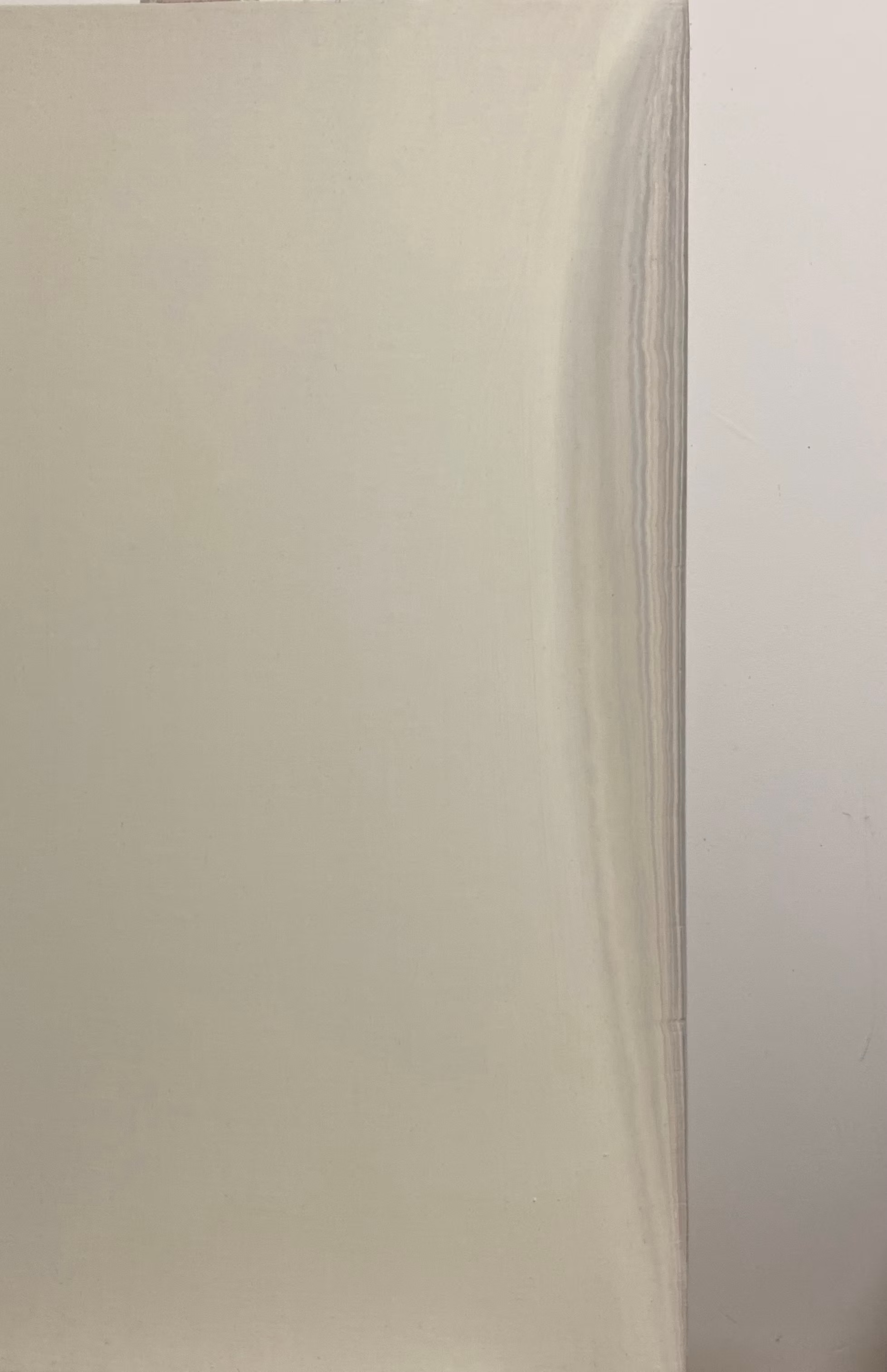
Kai Rennes, All Things Shining — hundreds of transparent layers of paint, the nuances of which cannot be reproduced in a photograph.
Part II of the series Layered: Mark Fish on the Works of Kai Rennes · Week 1
Each week, VSG publishes one text by Mark Fish, written in response to a work by the artist Kai Rennes. These are not reviews and not explanations. Rennes paints in hundreds of transparent layers; Fish writes in them — the texts join the works as one more layer, and are best read the way the paintings are looked at: slowly, and without the ambition of full understanding.
A brief key. Fish writes within Slavoj Žižek's reading of Hegel through Lacan, and three ideas run beneath every text. Lacan's three registers: the Imaginary (the world of images), the Symbolic (the world of language) and the Real (whatever escapes both) — art lives at their seams. The gaze: the artwork looks back at us, but without seeing; an artwork does not illustrate a thought, it is one. And Hegel's appearance: there is nothing hidden behind appearances, and that nothing is the point — which is why these texts contradict themselves on purpose; the truth is the movement between the two statements. The puns — DASEIN, the (w)hole, the GO(l)D bar — are not jokes but method: places where language thinks on its own. Confusion is a legitimate state in which to read these texts; it is the state they are written from.
About this text: the paintings of the series All Things Shining hold hundreds of layers that can be sensed but never seen one by one — time itself sedimented on the surface, like geological strata. What escapes the eye can only be spoken, so the text becomes a necessary layer of the work; yet it does not explain the image — it marks the point where the image exceeds seeing. The central claim: art is not a metaphor for thought. The artwork itself thinks, and what we see, when we truly look, is thinking made material.
Mark Fish is the pen name of a writer and curator, artist and researcher. He signs with it deliberately — in a series about faces erased by the flash of their own self-portraits, the pen name is not a disguise but the first layer of the work.
The NUANCE that cannot be seen — DASEIN
by Mark Fish
Only told.
And that is where the contemporary art begins. The symbolic has joined the imaginary. To tell us off, for we cannot fathom the real of it. Something has to be said about it. And what has to be said is not a lame excuse for the form itself, it is included in the form.
Layers and layers in one medium. One sentence, in the other. Could the sentence stand on its own? Of course not. Are the layers enough to form the full image? Again, not.
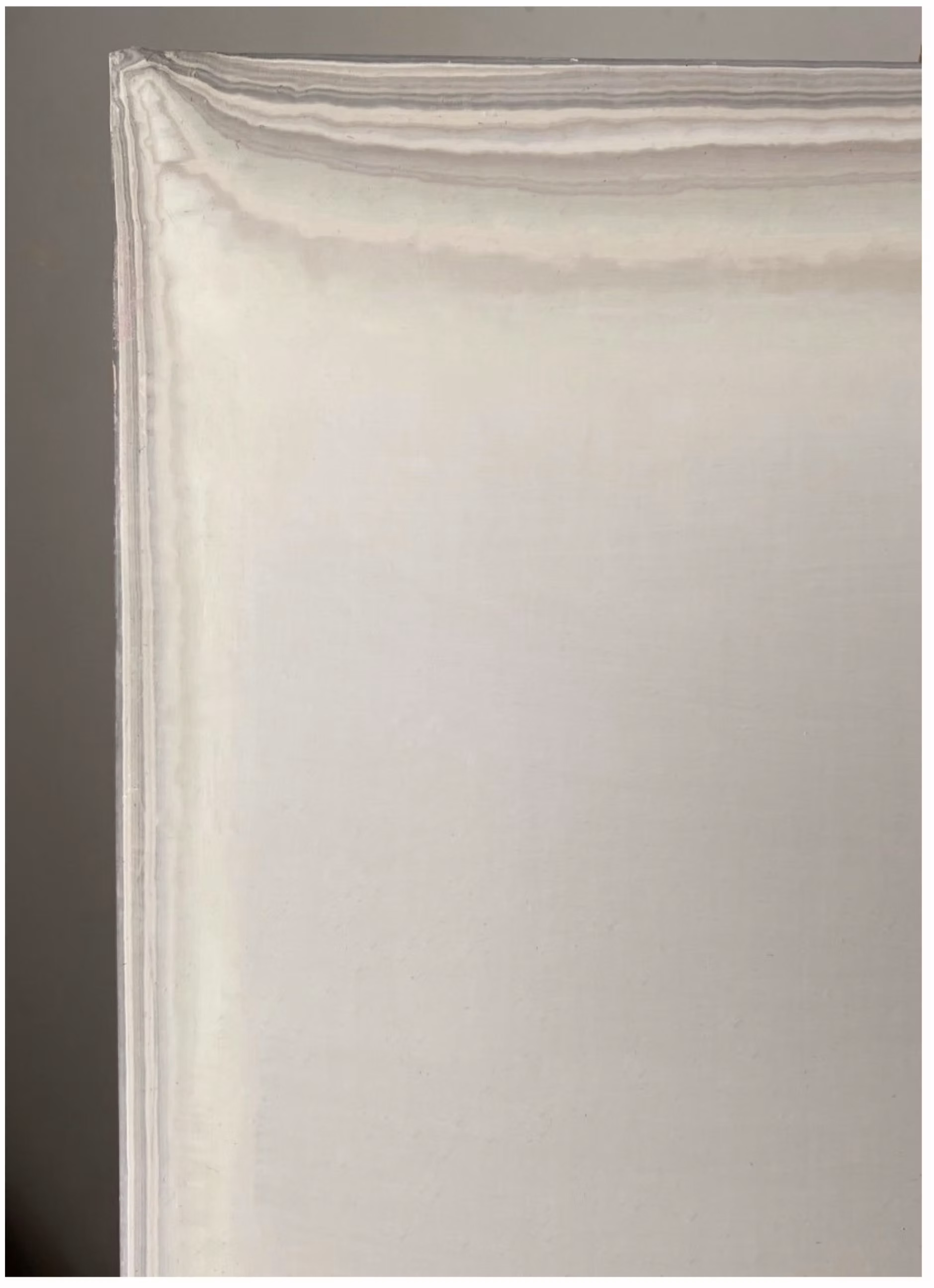
The intrigue was born in the image which consists of layers. One has to be very precise here: in movies, time is the medium, in this work the time is included in the medium. And we experience it as something we think of and not as something in which we are in. That is a world of difference. Time transpires on the surface of the painting as the sediment of layers of paint, not necessarily exposed through the expert knowledge of the painter, but as the ability of perception to differentiate by manipulating the light intake in the eye cone, if we want to go by biological discourse. We don't have to, we can as well choose the geographical: think of a cliff; now transform the vertical layering of the epoch, in the side view of the cliff, where each layer is so insignificantly meaningful in spatial terms — few centimeters accounting for thousands of years — now transform vertical into horizontal layering of one layer of paint on top of the other. Both surfaces, one of the cliff and the surface of the painting, tell the same nevertheless — the time is included. And although we know that it is there, we don't know what it is. As soon as that settles — and it does settle immediately, because we are in time — we are bound to lean on metaphor as our way out of that impossibility. It is impossible to know time because we are in time. It is impossible to know self because we are in it. And it is the self that is the time we take to deal with that unknown. Art is not metaphor, it's the synecdoche of all metaphors.
Conceptual art is conceptual because the concept is foreclosed. It's a grind on a concept that never really becomes what it wants to be — a clean idea. It is articulated in a messy work of cleaning the rumble of thought and the furthest it goes is to become an object. A real object, not in a slightest condescending, the abstract thing that in the lack of the better idea we refer to as to the concept of art. Art is what the thought can never become — real. If nothing, art is the mirror for concepts. But let us not make a habitual assumption: the mirror does not mirror what something in front it, in frame of it, is; in the frame, in the mirror, there is nothing, only the image of an object, at which it (the image in the mirror) looks, but cannot see (the object it images); and what the object is, is what it sees in the picture, the frame, the mirror. It sees nothing as the image. I see myself in the mirror, but what I see doesn't see me, because there is nothing there — (nothing) as the image of me, nothing in the form of me. Nothing that certainly doesn't look like nothing and looks like it's looking, but it doesn't see nevertheless. And that is what the concept is — nothing in the form of an image. And it persists. However, the one layer stands out. It is absolutely necessary to the image, and, it's the text. It is the frame that does not frame the visual field, but restrains the thinking parameter. The thing cannot be whatever! It can only be a specific intrigue of the thinker. The thinker happens to be an artist. Hence the medium, plus all of the above. Layers are not to be explained by the text! What a colossal mistake would be to think this! Layers are in the imaginary and symbolic realm, equally. The text is the image, and of course the image is the text, but there is no need to explain the later, it comes as all too obvious.
If the image needs some one to speak up for it, needs a layer to be added to it, then the real of it is looking at us. What we see is not what we look at. The seeing and looking do not coincide. We don't know what it needs from us, how could we possibly understand the image that is looked at, but not seen! fully? Which basically means image that is just noted as sense perception, or, not looked for real at it, at all! Which would be a common experience, but this is not a common sense experience. So we speak for it. But the text we utter does not add to the explanation, rather gives it a push to maybe try to finish, to render the image common, fully notionally conceived, thus the part of the world, the reality, as we call it. The layer is spoken, yet it functions in imaginary. It is a push towards the common sense of the act of seeing, or, 'maybe someone can explain me what I see', in layman's terms. The Art fails at this though. It fails at common sense. And this principal fail is reductio ad absurdum to actually not fail in principle if you are to make, or to recognize, art.
Intricate system of layering hides one fact though. That all the layers are on the same surface. All but one! That one of the text. Or rather, they are on the same surface, yet the symbolic doesn't blur the image. It is seen as if the different realities are merged. What cannot be seen can only be spoken of. And what has been spoken of can and must be seen. And what is seen in this manner is both not text nor image. What we see is the thought itself. There is something thinking there — there in the object of art. And I can see that, even though it is looking back, but doesn't see. If it is looking, but does not see, then it must be thinking. And it does, so we do.
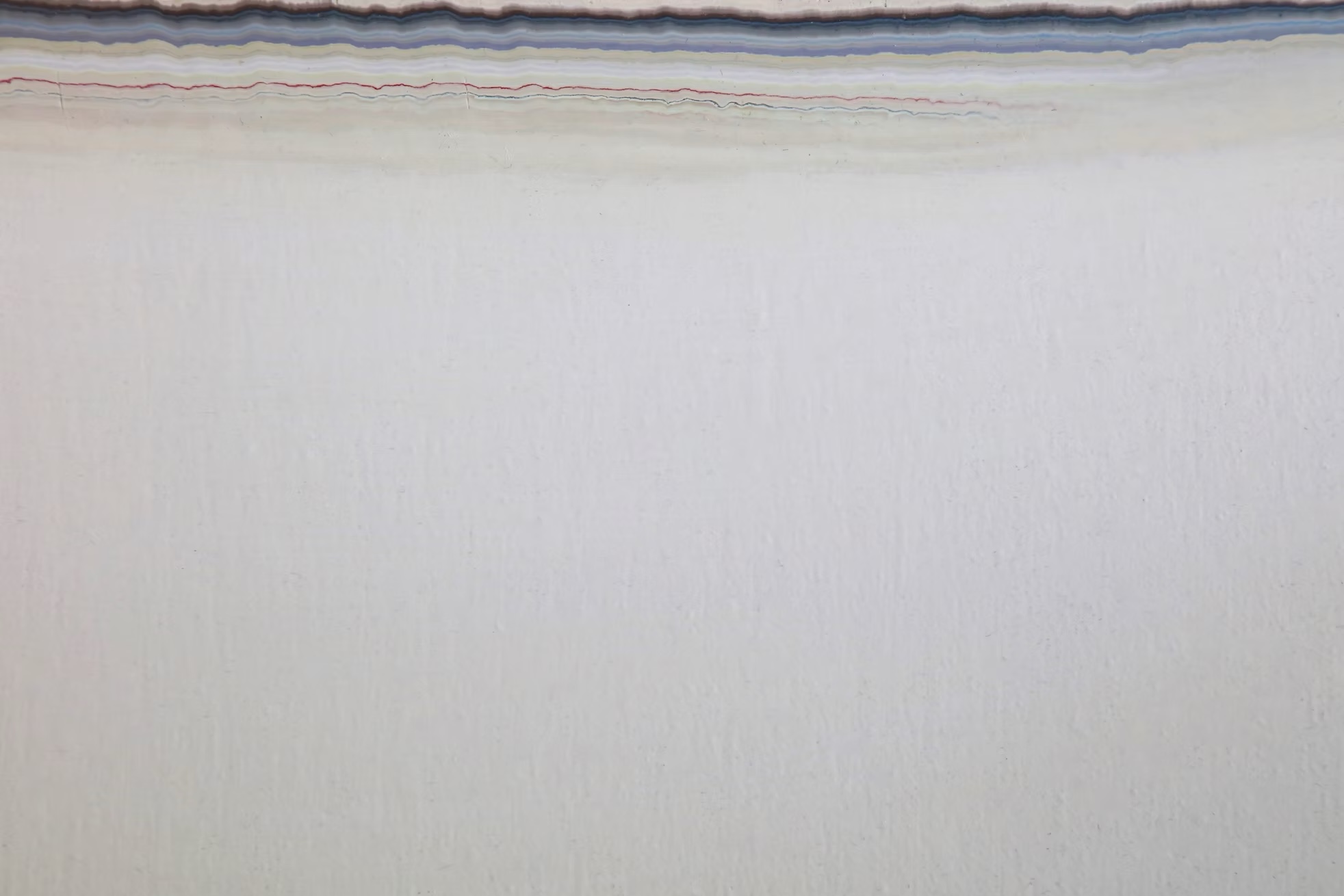
Observation brakes surface into layers. Art makes layers into a surface. Only the surfaces can be seen. What can be seen is what exists. Apart from what cannot be seen and has to be spoken of. And we are at art. It brings the real that cannot be fully notionally determined for the reality we look from.
¹ All Things Shining is a series of paintings of different sizes. Paintings consist of hundreds and hundreds of thin layers of colour. The paintings are quite subtle in their expression and very difficult to reproduce in a photography. The nuances created by the layers cannot be seen in a photo.